WORLD · 2026-10-16
Japan Meteorological Agency Mistakenly Reports Magnitude 9.9 Quake…Emergency Earthquake Alert Canceled After 8 Minutes
Japan’s meteorological agency mistakenly estimated a quake near the Kamchatka Peninsula at magnitude 9.9 and issued an emergency earthquake alert for a wide area, only to cancel it about eight minutes later. The actual quake was magnitude 6.9, and in Japan, shaking of intensity 1 was confirmed in parts of Hokkaido.
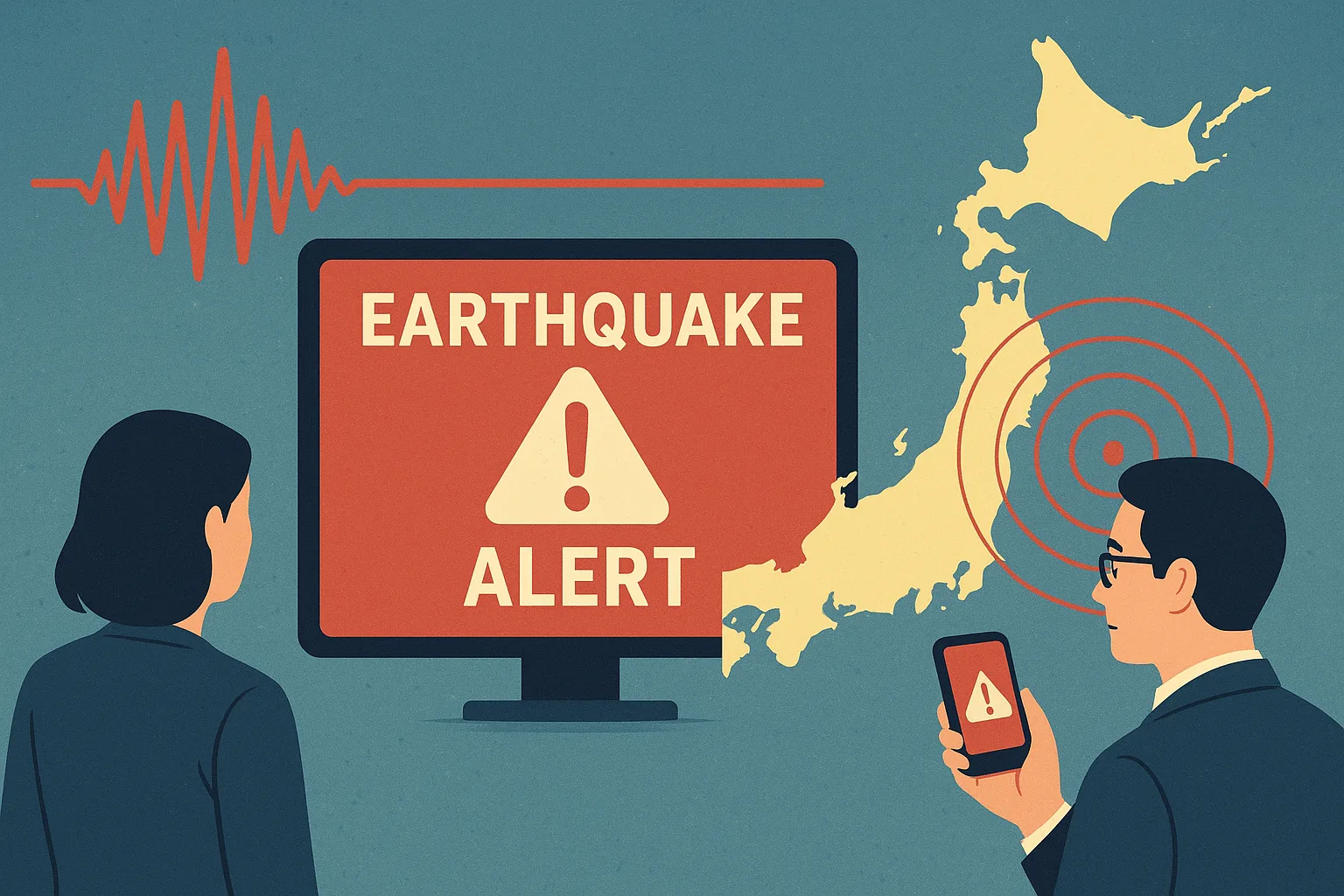
If your emergency earthquake alert goes off on your phone but there’s barely any shaking, it’s only natural to feel alarmed. In Japan, that’s exactly what happened when the meteorological agency mistakenly estimated that a magnitude 9.9 earthquake had occurred, then canceled the emergency earthquake alert about eight minutes later. That said, it was not the case that all of Japan actually shook. Because of the erroneous report, people were told to expect strong shaking across a wide area.
According to a report by Hankyoreh, Japan’s meteorological agency estimated the quake at magnitude 9.9 at 12:36 p.m. and also incorrectly identified the epicenter as being near the Kuril Islands. As a result, emergency earthquake alerts were issued for a broad area stretching from Hokkaido to the Tokai region. In Japan, this alert is issued when shaking of seismic intensity 5-lower or stronger is expected. Broadcasters such as NHK also warned that strong shaking was expected in multiple regions.
In reality, however, no major shaking was observed in Japan. About eight minutes later, the meteorological agency canceled the alert, and it was later confirmed that the actual quake had occurred around 12:38 p.m. near the Kamchatka Peninsula and measured magnitude 6.9. Its impact on Japan was limited to seismic intensity 1 in parts of Hokkaido. The term “magnitude” refers to the size of the earthquake itself, while “seismic intensity” refers to how strongly shaking is felt at a specific location, so the two numbers mean different things.
A magnitude 9.9 earthquake was not an actual recorded event. According to the report, the largest earthquake ever observed was the 1960 Valdivia earthquake in Chile, which measured magnitude 9.5, and there has never been a documented magnitude 9.9 earthquake anywhere in the world. The meteorological agency said it is investigating why the magnitude was overestimated and how the mistake happened. At an afternoon press conference, it apologized for causing inconvenience with an overly severe alert.
This incident shows that earthquake alerts are not announcements that confirm the final size of an earthquake, but warnings that rapidly estimate shaking based on initial observations. Quick guidance is important for reducing damage, but if the initial estimate is far off, it can also create unnecessary confusion. That is why the results of the meteorological agency’s investigation and any measures to prevent a repeat are being closely watched.
According to a report by Hankyoreh, Japan’s meteorological agency estimated the quake at magnitude 9.9 at 12:36 p.m. and also incorrectly identified the epicenter as being near the Kuril Islands. As a result, emergency earthquake alerts were issued for a broad area stretching from Hokkaido to the Tokai region. In Japan, this alert is issued when shaking of seismic intensity 5-lower or stronger is expected. Broadcasters such as NHK also warned that strong shaking was expected in multiple regions.
In reality, however, no major shaking was observed in Japan. About eight minutes later, the meteorological agency canceled the alert, and it was later confirmed that the actual quake had occurred around 12:38 p.m. near the Kamchatka Peninsula and measured magnitude 6.9. Its impact on Japan was limited to seismic intensity 1 in parts of Hokkaido. The term “magnitude” refers to the size of the earthquake itself, while “seismic intensity” refers to how strongly shaking is felt at a specific location, so the two numbers mean different things.
A magnitude 9.9 earthquake was not an actual recorded event. According to the report, the largest earthquake ever observed was the 1960 Valdivia earthquake in Chile, which measured magnitude 9.5, and there has never been a documented magnitude 9.9 earthquake anywhere in the world. The meteorological agency said it is investigating why the magnitude was overestimated and how the mistake happened. At an afternoon press conference, it apologized for causing inconvenience with an overly severe alert.
This incident shows that earthquake alerts are not announcements that confirm the final size of an earthquake, but warnings that rapidly estimate shaking based on initial observations. Quick guidance is important for reducing damage, but if the initial estimate is far off, it can also create unnecessary confusion. That is why the results of the meteorological agency’s investigation and any measures to prevent a repeat are being closely watched.
Related search terms
#Japan Meteorological Agency earthquake alert#magnitude 9.9 earthquake error#emergency earthquake alert canceled#Kamchatka Peninsula earthquake#Hokkaido seismic intensity 1#Japan earthquake warning system#NHK earthquake alert